
Featured Snippet
A synonym for food can be meal, dish, cuisine, fare, nourishment, sustenance, provisions, eats, or grub. The best choice depends on meaning and context: meal means food eaten at a particular time, while cuisine describes a cooking style and dish usually means one prepared food item.
“What’s another word for food?” You might ask this when writing an assignment, describing a restaurant, or trying to make a sentence less repetitive. It depends on what you mean. Food can refer to meals in general, nourishment, a dish, or something served for an occasion.
Words such as cuisine, meal, dish, fare, nourishment, and provisions can all work, but they do not mean exactly the same thing. Some sound natural in conversation, while others are more formal or specific. Choosing the right alternative can make your writing clearer and more precise.
For example, cuisine is about a style of cooking, while a dish normally means one prepared item. Fare can describe food that is offered or served, whereas nourishment focuses on food as something that supports the body. This guide explains alternatives to food and shows when each choice fits best, with examples for English, school, work, and writing.
What Does Food Mean?
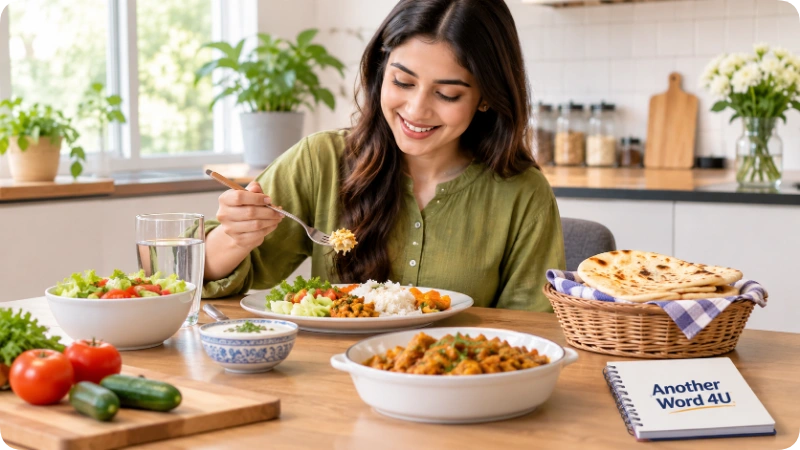
Food means something people or animals eat or drink to provide energy, nourishment, and support for the body. It is a broad everyday word that can describe everything from a simple snack to a complete meal.
For example:
- “We need to buy some food for dinner.”
- “The restaurant serves traditional food.”
- “Fresh food is available at the market.”
The word food is usually neutral and extremely common. It works in casual conversation, school writing, workplace communication, menus, recipes, and general descriptions.
Its broad meaning is important. Food can describe an entire category, while words such as dish, meal, or cuisine usually provide more specific information.
For example, “Italian food” can refer broadly to the cuisine of Italy, while “a bowl of pasta” identifies a particular dish.
Another Word for Food
There is no single perfect replacement for food because the best alternative depends on what you want to communicate.
Common Synonyms for Food
| Number | Synonym/Alternative | Type | Simple Meaning | Example Sentence |
|---|---|---|---|---|
| 1 | Meal | Synonym | Food eaten at a particular time | We had a delicious meal together. |
| 2 | Dish | Near-synonym | One prepared type of food | This dish contains rice and vegetables. |
| 3 | Cuisine | Context-specific | A style or tradition of cooking | She enjoys Italian cuisine. |
| 4 | Fare | Formal | Food that is served or offered | The café serves traditional fare. |
| 5 | Nourishment | Context-specific | Food viewed as supporting health and the body | The meal provided useful nourishment. |
| 6 | Sustenance | Formal | Food or drink needed to maintain the body | The travelers carried enough sustenance. |
| 7 | Provisions | Context-specific | Supplies of food and drink | They packed provisions for the trip. |
| 8 | Eats | Informal | Food, especially in casual speech | Let’s find some good eats nearby. |
| 9 | Grub | Informal | Food, especially ordinary food | We stopped for some quick grub. |
| 10 | Refreshments | Context-specific | Food and drinks served to guests | Refreshments were available after the meeting. |
Culinary Terms and Food-Related Alternatives
| Number | Synonym/Alternative | Type | Simple Meaning | Example Sentence |
|---|---|---|---|---|
| 11 | Meal | Common expression | A serving or occasion of eating | Breakfast was my favorite meal today. |
| 12 | Dish | Culinary term | A particular prepared item | The chef recommended the seafood dish. |
| 13 | Cooking | Context-specific | Prepared food or the act/style of preparing it | I love my grandmother’s cooking. |
| 14 | Cuisine | Culinary term | A recognized cooking style | Thai cuisine often uses fresh herbs. |
| 15 | Fare | Literary/formal | Food provided or served | The inn offered simple country fare. |
| 16 | Nourishment | Formal | Food considered as nourishment | Children need adequate nourishment. |
| 17 | Sustenance | Formal | Basic food needed to live | The supplies provided sustenance during the journey. |
| 18 | Provision | Context-specific | A supply of food or necessities | The hikers checked their provisions. |
Formal and Less Common Words for Food
| Number | Synonym/Alternative | Type | Simple Meaning | Example Sentence |
|---|---|---|---|---|
| 19 | Comestibles | Formal | Things suitable for eating | The store offered imported comestibles. |
| 20 | Edibles | Context-specific | Things that can be eaten | The basket contained several homemade edibles. |
| 21 | Morsel | Context-specific | A small piece or amount of food | He offered the dog a small morsel. |
| 22 | Repast | Formal/literary | A meal | They enjoyed a quiet evening repast. |
| 23 | Victuals | Old-fashioned/formal | Food or provisions | The travelers stocked up on victuals. |
| 24 | Snacks | Context-specific | Small amounts of food between meals | We packed snacks for the journey. |
| 25 | Dishes | Context-specific | Several prepared foods | The menu included several vegetarian dishes. |
Choosing the Right Alternative
Some choices above are true substitutes only in particular contexts. For example, cuisine cannot normally replace food in “I need to buy some food.” Likewise, morsel refers to a small amount, not food in general.
Best Synonym by Context

| If You Mean… | Use… | Why |
|---|---|---|
| Food eaten at breakfast, lunch, or dinner | Meal | Refers to food eaten on a particular occasion. |
| One prepared item | Dish | More precise than the broad word food. |
| A national or cultural cooking style | Cuisine | Focuses on traditions, ingredients, and methods of cooking. |
| Food served by a restaurant | Fare | Gives the sentence a slightly more formal tone. |
| Food that supports the body | Nourishment | Emphasizes its nutritional or sustaining role. |
| Basic food needed to survive | Sustenance | Stronger focus on maintaining life or strength. |
| Food supplies for a journey | Provisions | Refers to stored food and other supplies. |
| Food in casual conversation | Eats or grub | Informal and conversational choices. |
| Food and drinks offered to guests | Refreshments | Appropriate for meetings, events, and gatherings. |
| A small amount of food | Morsel | Specifies size rather than simply naming food. |
How to Choose the Right Synonym for Food
Start by asking what food means in your sentence.
If you mean a complete eating occasion, meal is usually the clearest choice. If you mean one prepared item, choose a dish. When discussing a regional or cultural style of cooking, cuisine is more accurate.
Tone also matters. Food is neutral and works almost everywhere. Fare, nourishment, and sustenance can sound more formal. Grub and eats are casual and may sound inappropriate in formal writing.
Think about intensity and purpose as well. Nourishment highlights the body’s needs, while sustenance can emphasize basic survival or continued strength. Provisions focuses on food as a stored supply rather than something currently being eaten.
Finally, consider your audience. A beginner-friendly sentence will usually sound more natural with food, meal, or dish than with a highly formal word such as comestibles.
Real-Life Examples
The following examples show why choosing the right alternative matters:
- General: “We need more food for the weekend.”
- Meal: “We prepared a large meal for the family.”
- Dish: “The chicken curry was my favorite dish.”
- Cuisine: “She is interested in Japanese cuisine.”
- Fare: “The restaurant is known for its traditional fare.”
- Nourishment: “The soup provided warmth and nourishment.”
- Sustenance: “The travelers carried enough food for basic sustenance.”
- Provisions: “They bought provisions before leaving for the cabin.”
- Eats: “We found some great eats near the market.”
- Grub: “Everyone was ready for some hot grub after the hike.”
- Refreshments: “Light refreshments were served after the presentation.”
- Morsel: “The child offered the puppy a tiny morsel.”
- Cooking: “Her mother’s cooking always reminds her of home.”
Notice that these words are not interchangeable in every sentence. The best choice depends on if you are talking about the food itself, a meal, a cooking tradition, a supply, or the purpose food serves.
Antonyms for Food
Food does not have one exact opposite. Instead, several words describe the absence of food, the lack of food intake, or a condition associated with not eating.
| Antonym | Meaning | Example |
|---|---|---|
| Hunger | The physical or emotional state of needing or wanting food. | Hunger made it difficult to concentrate. |
| Starvation | Severe suffering caused by a serious lack of food. | The crisis left many people facing starvation. |
| Fasting | Choosing or being required not to eat for a period. | She was fasting before the religious observance. |
| Food deprivation | Lack of adequate access to food. | The program aims to reduce food deprivation. |
| Food scarcity | A situation in which food is difficult to obtain. | The region experienced food scarcity after the disaster. |
These are contextual opposites rather than direct dictionary antonyms. Hunger, for example, is a condition caused by needing food, while starvation describes an extreme lack of food.
Words That Are Easy to Confuse With Food
Meal
A meal is food eaten at a particular time or as a particular eating occasion. It is narrower than food.
Example: “Dinner was our largest meal of the day.”
Cuisine
Cuisine means a style or tradition of cooking, often associated with a country, region, culture, or culinary tradition. It does not simply mean any food.
Example: “Mexican cuisine includes many regional cooking traditions.”
Dish
A dish usually means one prepared type of food. A meal can contain several dishes.
Example: “The restaurant’s most popular dish is grilled salmon.”
When Food Is Not the Precise Choice
The word food is useful because it is broad, but that broadness can sometimes make writing less precise.
If you are discussing a complete eating occasion, the meal gives more information. Instead of “We enjoyed the food,” you could say, “We enjoyed the meal.”
If you are describing one prepared item, dish is clearer: “This dish contains roasted vegetables.”
When discussing a cultural cooking tradition, cuisine is much more precise. “Indian cuisine” refers to a broad culinary tradition, while “Indian food” is a more general expression.
For formal writing about the body’s needs, nourishment or sustenance may communicate the intended idea more precisely. For food carried as supplies, provisions is a better choice.
The goal is not to replace food every time. A common word is often the clearest option. Use an alternative only when it adds useful meaning.
Phrases, Idioms, and Expressions Related to Food
These expressions are related to food but should not be treated as direct synonyms.
Put food on the table
Meaning: To provide enough money or resources for basic living.
Example: “Her job helps put food on the table.”
Food for thought
Meaning: An idea or information worth thinking about.
Example: “The speaker’s final question gave us some food for thought.”
Take the words right out of someone’s mouth
Meaning: To say exactly what another person was about to say.
Example: “You took the words right out of my mouth when you mentioned the budget.”
Have a lot on one’s plate
Meaning: To have many responsibilities or problems to deal with.
Example: “I have a lot on my plate this week.”
Bring home the bacon
Meaning: To earn money to support oneself or one’s household.
Example: “They both work hard to bring home the bacon.”
These expressions have figurative meanings, so replacing the word food with one of them would change the meaning of a sentence.
Common Mistakes When Using Food
1. Using cuisine when you mean a meal
Incorrect: “We ordered a cuisine for dinner.”
Better: “We ordered a meal for dinner.”
Cuisine describes a style of cooking, not normally one serving or eating occasion.
2. Treating dish and meal as identical
A dish is generally one prepared food item, while a meal can contain several dishes.
For example, rice, vegetables, and grilled chicken may be separate dishes served as part of one meal.
3. Using formal alternatives in casual situations
Words such as comestibles, repast, and sustenance can sound unnatural in ordinary conversation.
Instead of “What comestibles are you having tonight?”, simply say, “What are you having for dinner?”
4. Assuming every related word is a true synonym
Hunger, starvation, and fasting are related to the absence of food, but they do not mean food itself. Always check if the replacement preserves the original meaning.
Comparison of Food and Its Alternatives
| Antonym | Meaning | Example |
|---|---|---|
| Hunger | The physical or emotional state of needing or wanting food. | Hunger made it difficult to concentrate. |
| Starvation | Severe suffering caused by a serious lack of food. | The crisis left many people facing starvation. |
| Fasting | Choosing or being required not to eat for a period. | She was fasting before the religious observance. |
| Food deprivation | Lack of adequate access to food. | The program aims to reduce food deprivation. |
| Food scarcity | A situation in which food is difficult to obtain. | The region experienced food scarcity after the disaster. |
The most important distinction is breadth. Food is the general category. Meal describes an eating occasion, dish describes a prepared item, and cuisine describes a style or tradition of cooking.
Frequently Asked Questions About Food
1. What is the most common synonym for food?
Meal is a common alternative, but it is not always interchangeable with food. A meal is food eaten at a particular time, while food is the broader category.
2. Is cuisine another word for food?
Only in certain contexts. Cuisine refers to a style or tradition of cooking, such as Italian, Japanese, or Mexican cuisine. It should not replace food in every sentence.
3. What is a formal word for food?
Fare, nourishment, sustenance, and comestibles can be more formal alternatives. The best choice depends on the intended meaning.
4. What is an informal word for food?
Eats and grub are informal alternatives. They are most natural in casual conversation rather than formal academic or professional writing.
5. What is the difference between food and a dish?
Food is a broad term for things people eat or drink. A dish is usually one prepared type of food, such as pasta, soup, curry, or grilled vegetables.
Final Thoughts
Food is a broad, neutral word, so the best alternative depends on the meaning you want to add.
Choose meal for an eating occasion, dish for one prepared item, cuisine for a cooking tradition, fare for a more formal description, and nourishment or sustenance when emphasizing the body’s needs.
For clearer English, always consider meaning, tone, context, and audience before replacing a familiar word.

Sophia Bennett is a dedicated Language Researcher and Content Writer at AnotherWord4UU.com. She specializes in creating well-researched content on synonyms, alternative words, vocabulary, expressions, and English language usage. Her goal is to help students, writers, professionals, and language learners communicate more effectively by finding the most accurate and impactful words. Through clear, practical, and engaging language guides, Sophia makes expanding vocabulary simple, accessible, and enjoyable.










