Featured Snippet
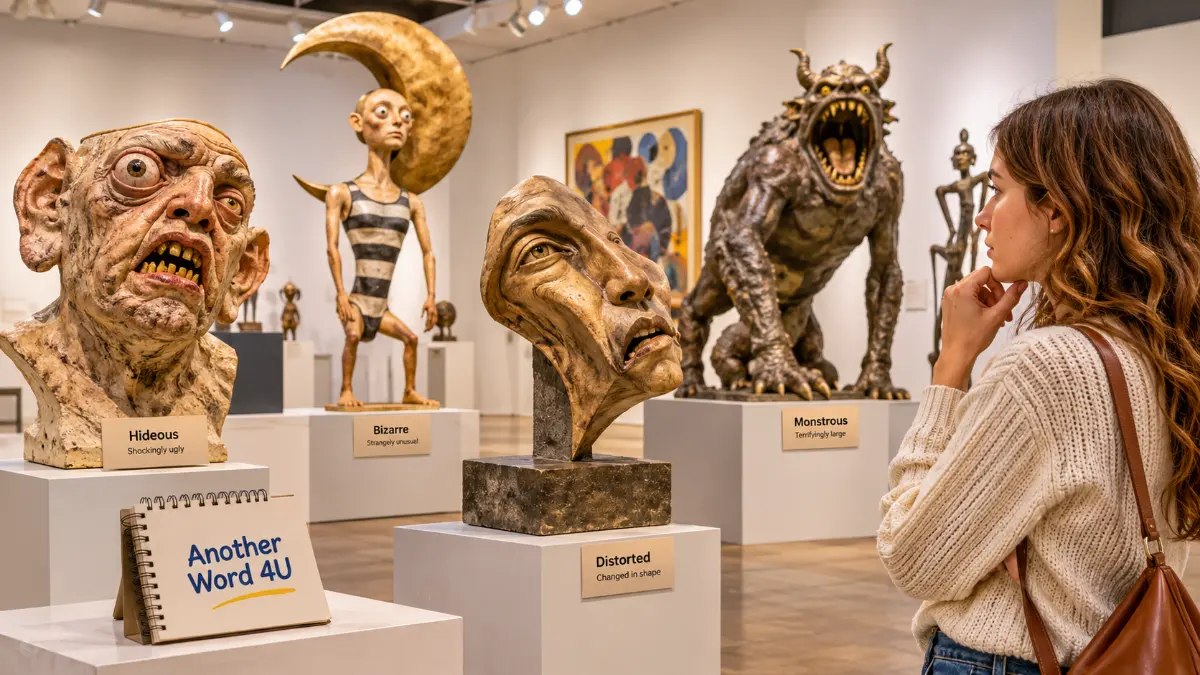
A synonym for grotesque is hideous, meaning extremely ugly or unpleasant. Other alternatives include monstrous, repulsive, bizarre, distorted, and revolting. Each word has a slightly different meaning, helping describe extreme ugliness, unnatural appearances, disturbing qualities, or something unusually strange.
Imagine describing a strange sculpture, a disturbing painting, or an unusually distorted face. The word grotesque may come to mind, but sometimes another word communicates the exact feeling more clearly. Depending on the situation, you might mean something hideous, bizarre, monstrous, revolting, or simply absurd. Although these words share certain similarities, they are not interchangeable in every sentence. Some emphasize extreme ugliness, while others describe unnatural shapes, disturbing appearances, or ridiculous exaggeration.
Learning the differences helps you choose language that matches your intended meaning. if you are writing a school assignment, describing artwork, discussing a frightening scene, or improving your everyday vocabulary, understanding alternatives to grotesque can make your communication more precise.
This guide explores useful synonyms, related expressions, antonyms, and common usage mistakes. You will also find practical examples explaining how different alternatives work in context, making it easier to select the right word for conversations, creative writing, and formal descriptions.
What Does Grotesque Mean?
The adjective grotesque describes something extremely strange, distorted, exaggerated, or unpleasant in appearance. It often combines unusual shapes or proportions with an impression of ugliness, absurdity, or disturbance.
For example:
- The artist created a grotesque sculpture with an enormous head and twisted limbs.
- The movie featured grotesque creatures with unnatural faces.
- The advertisement used grotesque exaggeration to criticize consumer culture.
The word can describe physical appearances, artwork, behavior, situations, and fictional characters. Its meaning depends on context.
Tone and emotion: Grotesque usually has a strong negative or unsettling tone. However, it can also describe unusual artistic styles that intentionally combine exaggeration, humor, and distortion.
In art and literature: The grotesque is also a recognizable artistic and literary quality or style involving strange, exaggerated, distorted, or sometimes disturbing imagery. Grotesque figures can appear in sculpture, architecture, paintings, and fiction.
As a noun: A grotesque can refer to a strange or distorted decorative figure, especially one used in architectural ornamentation.
Another Word for Grotesque
The following alternatives cover different aspects of grotesque, from extreme ugliness to unusual appearances and disturbing imagery.
| Number | Synonym/Alternative | Type | Simple Meaning | Example Sentence |
|---|---|---|---|---|
| 1 | Hideous | Synonym | Extremely ugly or unpleasant | The building had a hideous exterior. |
| 2 | Monstrous | Near-synonym | Extremely unnatural, frightening, or enormous | The story described a monstrous creature. |
| 3 | Repulsive | Near-synonym | Causing strong dislike or disgust | The character had a repulsive appearance. |
| 4 | Revolting | Near-synonym | Extremely disgusting or offensive | The documentary showed a revolting scene. |
| 5 | Bizarre | Near-synonym | Very unusual or strange | The artist created a bizarre installation. |
| 6 | Distorted | Context-specific alternative | Changed into an unnatural shape or form | The mirror showed a distorted reflection. |
| 7 | Misshapen | Near-synonym | Having an irregular or unnatural shape | A misshapen object sat on the table. |
| 8 | Horrific | Near-synonym | Extremely shocking or frightening | The novel describes a horrific incident. |
| 9 | Ghastly | Near-synonym | Extremely unpleasant, frightening, or pale | The painting showed a ghastly figure. |
| 10 | Disgusting | Near-synonym | Causing strong dislike or nausea | The scene was genuinely disgusting. |
| 11 | Macabre | Context-specific alternative | Associated with death or disturbing subjects | The gallery displayed macabre artwork. |
| 12 | Nightmarish | Near-synonym | Resembling a frightening dream | The film presented a nightmarish landscape. |
| 13 | Freakish | Near-synonym | Extremely unusual or unnatural | The fictional creature had freakish proportions. |
| 14 | Outlandish | Near-synonym | Extremely unusual or unconventional | He wore an outlandish costume. |
| 15 | Absurd | Context-specific alternative | Completely unreasonable or ridiculous | The proposal included an absurd suggestion. |
| 16 | Ludicrous | Context-specific alternative | So unreasonable that it seems ridiculous | The design looked ludicrously exaggerated. |
| 17 | Uncanny | Near-synonym | Strange in a way that feels unsettling | The doll had an uncanny resemblance to a person. |
| 18 | Deformed | Context-specific alternative | Having an altered or irregular physical form | The fictional monster had a deformed shape. |
| 19 | Warped | Context-specific alternative | Bent, twisted, or distorted | The heat left the plastic warped. |
| 20 | Unsightly | Near-synonym | Unpleasant to look at | The damaged wall was unsightly. |
| 21 | Appalling | Near-synonym | Extremely shocking or unacceptable | The artwork depicted an appalling situation. |
| 22 | Eerie | Near-synonym | Strange and frightening | An eerie figure appeared in the painting. |
| 23 | Grotesque-looking | Descriptive phrase | Having a strange or unpleasant appearance | The creature was grotesque-looking. |
| 24 | Monstrous-looking | Descriptive phrase | Resembling something frightening or unnatural | The mask was monstrous-looking. |
| 25 | Horribly distorted | Descriptive phrase | Changed into a very unnatural shape | The photograph showed a horribly distorted image. |
Important Differences Between Grotesque Synonyms
Not every alternative is a direct synonym. Bizarre emphasizes strangeness, while hideous focuses on extreme ugliness. Macabre relates particularly to death or disturbing subjects. Similarly, uncanny describes something strangely unsettling, whereas repulsive emphasizes a strong feeling of disgust.
Best Synonym by Context
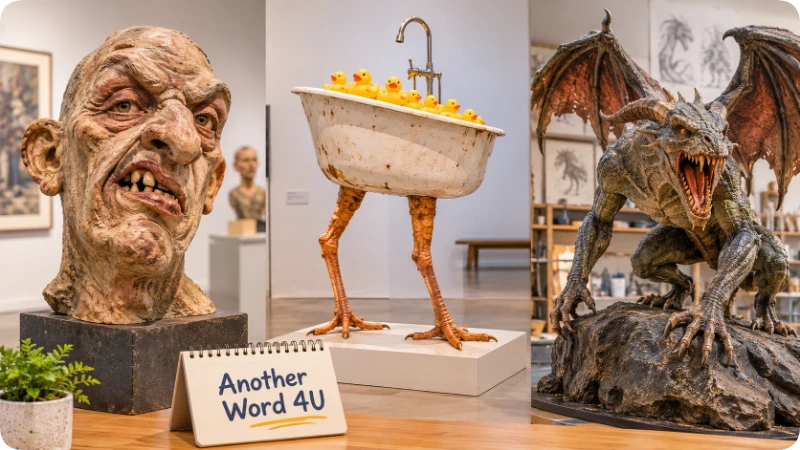
The best alternative depends on which quality you want to emphasize.
| If you mean… | Use… | Why |
|---|---|---|
| Extremely ugly | Hideous | Directly emphasizes unpleasant appearance. |
| Frightening or unnatural | Monstrous | Suggests something resembling a monster. |
| Causing disgust | Repulsive | Highlights a strong feeling of dislike. |
| Extremely disgusting | Revolting | Communicates intense disgust. |
| Very unusual | Bizarre | Focuses on strangeness rather than ugliness. |
| An unnatural shape | Distorted | Describes an altered appearance or form. |
| Death-related imagery | Macabre | Specifically suggests disturbing themes involving death. |
| Dreamlike horror | Nightmarish | Creates an impression of frightening unreality. |
| Strange and unsettling | Uncanny | Emphasizes an uncomfortable sense of unfamiliarity. |
| Ridiculous exaggeration | Absurd | Highlights unreasonable or illogical qualities. |
| An unpleasant appearance | Unsightly | Provides a milder description. |
| A frightening scene | Horrific | Emphasizes shock and fear. |
How to Choose the Right Synonym for Grotesque
Choosing the right alternative requires understanding what you actually want to communicate.
1. Consider the main meaning
Decide if you are describing ugliness, unusual proportions, fear, disgust, or absurdity.
For example, hideous works when appearance is the main concern, while bizarre is more suitable when something is simply unusual.
2. Check the intensity
Some alternatives communicate stronger emotions than others.
- Mild: Unsightly
- Unusual: Bizarre
- Strong: Hideous
- Very strong: Revolting or repulsive
These are approximate distinctions rather than fixed levels. Context can change how strongly a word sounds.
3. Think about your audience
In everyday conversation, words such as strange, bizarre, and disgusting may sound more natural. In formal descriptions or literary analysis, distorted, macabre, and monstrous may communicate more specific ideas.
4. Consider the subject
A sculpture, fictional creature, disturbing scene, and unreasonable proposal require different vocabulary. Avoid choosing a word simply because it appears in a synonym list.
5. Check literal and figurative meaning
A distorted sculpture can be grotesque in a physical sense. A grotesque exaggeration, however, describes an extreme or absurd representation rather than an actual physical shape.
Real-Life Examples
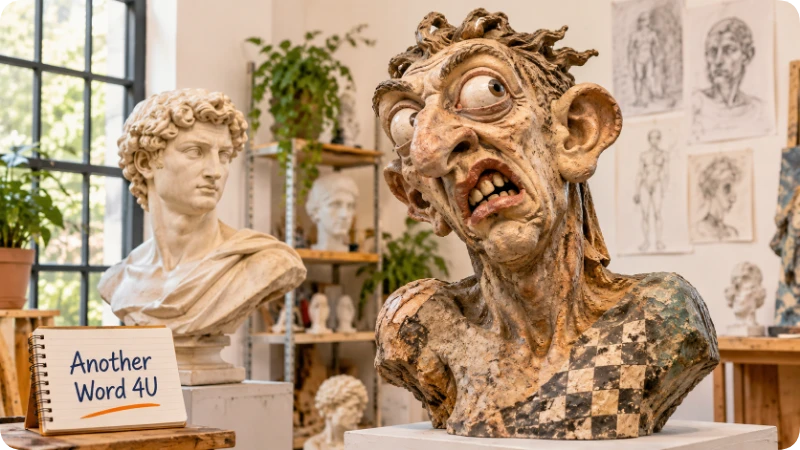
Here are practical examples showing how different alternatives work naturally.
| Situation | Example Sentence | Best Word |
|---|---|---|
| Describing a painting | The painting showed a hideous creature with twisted features. | Hideous |
| Discussing a horror movie | A monstrous figure appeared behind the door. | Monstrous |
| Reviewing artwork | The exhibition included several bizarre sculptures. | Bizarre |
| Describing a damaged image | The photograph looked distorted after editing. | Distorted |
| Discussing a disturbing scene | The film contained a revolting scene. | Revolting |
| Describing unusual fashion | His outlandish costume attracted everyone’s attention. | Outlandish |
| Writing a ghost story | An eerie shadow moved across the wall. | Eerie |
| Discussing dark literature | The novel uses macabre imagery throughout. | Macabre |
| Describing a fictional landscape | The characters entered a nightmarish world. | Nightmarish |
| Discussing an unreasonable idea | The suggestion sounded completely absurd. | Absurd |
These examples demonstrate why choosing a synonym requires more than finding a word with a similar dictionary meaning.
Antonyms for Grotesque
| Antonym | Meaning | Example |
|---|---|---|
| Beautiful | Pleasing to look at. | The artist created a beautiful sculpture. |
| Attractive | Appealing in appearance. | The building has an attractive design. |
| Lovely | Pleasant and enjoyable. | She admired the lovely painting. |
| Graceful | Elegant in shape or movement. | The dancer made graceful movements. |
| Normal | Not unusual or abnormal. | The sculpture had normal proportions. |
| Natural | Existing without artificial distortion. | The photograph showed natural features. |
| Proportionate | Having balanced dimensions. | The figure had proportionate features. |
| Pleasant | Giving a positive or comfortable impression. | The room had a pleasant appearance. |
Antonyms describe qualities opposite to grotesque, particularly when the word refers to ugliness, distortion, or unpleasant appearance.
Note: These are contextual opposites, not universal antonyms. For example, beautiful contrasts with grotesque when discussing appearance, while normal contrasts with it when discussing unusual shapes or proportions.
Words That Are Easy to Confuse With Grotesque
Some words share aspects of grotesque but communicate different ideas.
1. Bizarre
Bizarre means extremely unusual or strange. It does not necessarily suggest ugliness, horror, or disgust.
Example: The museum displayed a bizarre collection of unusual objects.
Difference: Something can be bizarre without being grotesque.
2. Horrific
Horrific describes something extremely frightening, shocking, or disturbing. It emphasizes fear and shock rather than distorted appearance.
Example: The book describes a horrific accident.
Difference: A grotesque image may look disturbing, but a horrific event does not need to involve anything visually unusual.
3. Macabre
Macabre describes something associated with death or disturbing subjects, often creating a dark atmosphere.
Example: The artist became famous for creating macabre illustrations.
Difference: Macabre has a more specific connection to death and dark themes, whereas grotesque can describe unusual shapes, exaggerated appearances, and absurd imagery.
When Grotesque Is Not the Precise Choice
Although grotesque is useful, it may not always express your intended meaning accurately.
- When something is simply unusual: Use bizarre or unusual. These words avoid suggesting extreme ugliness.
- When appearance is the main concern: Use hideous or unsightly for a more direct description.
- When something causes disgust: Choose repulsive or revolting.
- When something is frightening: Use horrific, terrifying, or nightmarish, depending on the situation.
- When something has an irregular shape: Choose misshapen, warped, or distorted.
- When something is related to death: Use macabre if the subject involves dark or death-related imagery.
- When something is ridiculous: Use absurd or ludicrous instead of grotesque.
One additional consideration is describing real people. Words such as deformed and freakish can sound insensitive or demeaning when applied to someone’s body. Prefer specific, respectful descriptions when discussing real individuals.
Phrases, Idioms, and Expressions Related to Grotesque
These expressions communicate ideas associated with grotesque, although they are not all direct synonyms.
| Phrase or Expression | Simple Meaning | Example |
|---|---|---|
| Grotesque exaggeration | An extreme or distorted representation. | The cartoon uses grotesque exaggeration to criticize society. |
| Grotesque distortion | An unnatural alteration of appearance or form. | The artist created a grotesque distortion of the human face. |
| A monstrous sight | Something extremely unpleasant or frightening to see. | The abandoned building was a monstrous sight. |
| A distorted image | A picture or representation with altered proportions. | The screen displayed a distorted image. |
| A macabre spectacle | A disturbing display associated with death or horror. | The story describes a macabre spectacle. |
| Beyond the pale | Outside what is considered acceptable or reasonable. | His cruel behavior was beyond the pale. |
Remember: These are phrases and expressions, not interchangeable single-word synonyms. Their suitability depends on the sentence.
Common Mistakes When Using Grotesque
English learners sometimes use grotesque too broadly. Avoid these common mistakes.
1. Treating bizarre and grotesque as identical
Bizarre describes unusual qualities, while grotesque often combines strangeness with distortion, ugliness, or disturbing exaggeration.
Incorrect: Every unusual object is grotesque.
Better: The sculpture was bizarre because of its unusual design.
2. Using grotesque when you mean frightening
Grotesque can describe a disturbing appearance, but it does not always communicate fear.
Better: Use terrifying when the main idea is intense fear.
3. Confusing macabre with grotesque
Macabre specifically relates to death or disturbing subjects. Grotesque has a broader range of meanings.
4. Using overly harsh descriptions
Words such as hideous, repulsive, and deformed can sound unnecessarily insulting when describing real people. Choose neutral, respectful language when appropriate.
Comparison of Grotesque and Its Alternatives
The following comparison highlights the main differences between the most useful choices.
| Word | Meaning / Main Focus |
|---|---|
| Grotesque | Distortion, ugliness, and strangeness. Disturbing tone; strong intensity; used in art, appearance, and exaggeration. |
| Hideous | Extreme ugliness. Negative tone; strong intensity; used for physical appearance. |
| Bizarre | Unusual qualities. Neutral to negative tone; moderate intensity; used for strange situations or objects. |
| Monstrous | Frightening or unnatural qualities. Dramatic tone; strong intensity; used in fiction and horror. |
| Repulsive | Strong dislike or disgust. Negative tone; strong intensity; used for unpleasant appearance or behavior. |
| Distorted | Altered shape or representation. Neutral tone; variable intensity; used for images, shapes, and descriptions. |
| Macabre | Death-related imagery. Dark tone; moderate to strong intensity; used in literature and artwork. |
| Absurd | Ridiculous or unreasonable qualities. Critical or humorous tone; variable intensity; used for ideas and situations. |
| Unsightly | Unpleasant appearance. Mildly negative tone; mild to moderate intensity; used in everyday descriptions. |
| Uncanny | Strange and unsettling qualities. Unsettling tone; moderate intensity; used for unusual resemblance or atmosphere. |
The main difference is emphasis: grotesque combines disturbing strangeness with exaggeration or unpleasant appearance, while its alternatives highlight more specific qualities.
Frequently Asked Questions About Grotesque
1. What is the closest synonym for grotesque?
Hideous is a close alternative when grotesque describes extreme ugliness. However, monstrous, repulsive, and distorted may be more accurate depending on the context.
2. Is grotesque a positive or negative word?
Grotesque generally has a negative or unsettling meaning. However, in art and literature, it can describe an intentional creative style that combines exaggeration, unusual forms, and disturbing or humorous elements.
3. What is a simple word for grotesque?
Ugly is a simple alternative when describing an unpleasant appearance. Strange or bizarre may work better when the main idea is unusual rather than ugly.
4. What is the difference between grotesque and bizarre?
Grotesque often suggests something distorted, ugly, or disturbing. Bizarre simply means extremely unusual or strange and does not necessarily communicate disgust or ugliness.
5. Can grotesque describe something other than appearance?
Yes. Grotesque can describe behavior, situations, artistic representations, exaggerations, and ideas. For example, a grotesque exaggeration can make a situation seem extremely absurd or distorted.
Final Thoughts
Grotesque is a strong descriptive word for something unusually distorted, exaggerated, ugly, or disturbing.
However, alternatives such as hideous, bizarre, monstrous, repulsive, and macabre communicate different qualities.
The best choice depends on your intended meaning, emotional tone, intensity, and audience.
Understanding these distinctions will help you use more precise vocabulary in everyday conversations, academic writing, and creative descriptions.

Sophia Bennett is a dedicated Language Researcher and Content Writer at AnotherWord4UU.com. She specializes in creating well-researched content on synonyms, alternative words, vocabulary, expressions, and English language usage. Her goal is to help students, writers, professionals, and language learners communicate more effectively by finding the most accurate and impactful words. Through clear, practical, and engaging language guides, Sophia makes expanding vocabulary simple, accessible, and enjoyable.










