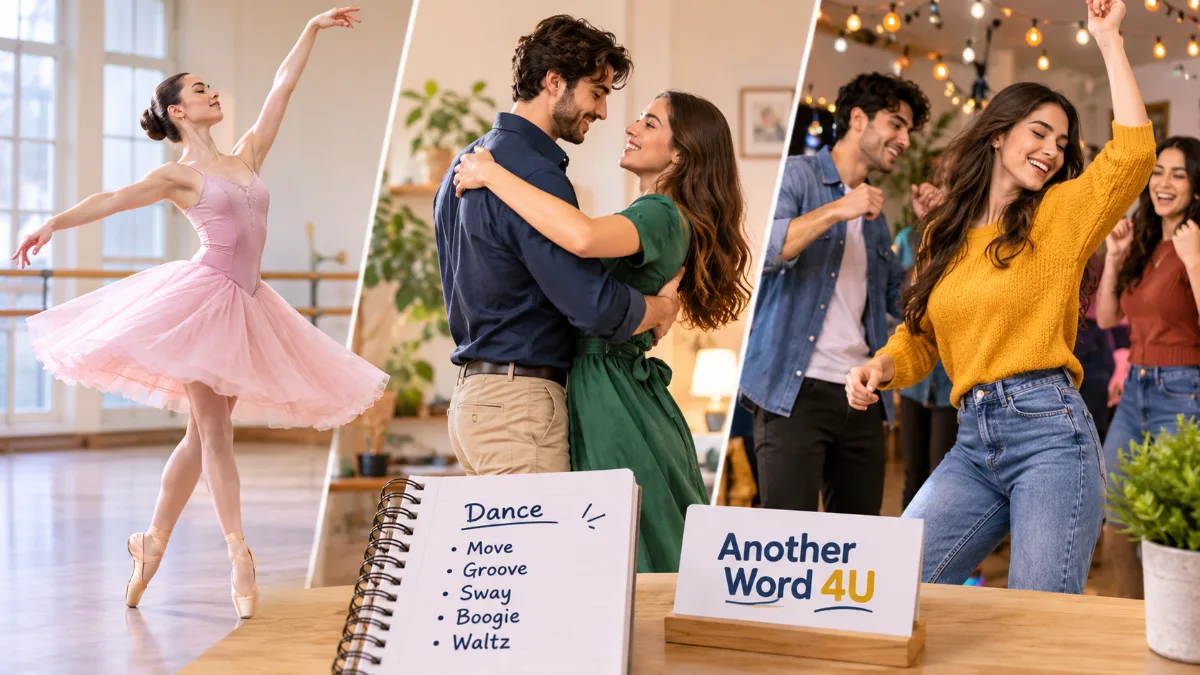
Imagine describing a wedding celebration, a ballet performance, or a group of friends moving to music. The word dance works in all these situations, but sometimes another word can express the movement, style, or emotion more clearly.
You might want a graceful alternative for a formal performance, an energetic expression for a party, or a specific term for a traditional dance style. Understanding synonyms for dance helps you make your speaking and writing more interesting while choosing words that match the situation. Some alternatives describe rhythmic body movements, while others refer to particular performance styles, social activities, or ways of moving. Words such as sway, twirl, perform, and boogie are related to dancing, but they do not always have exactly the same meaning.
Learning these differences can help English learners communicate naturally, avoid awkward word choices, and describe movement more accurately. This guide explores useful alternatives, their meanings, examples, and the situations where each expression works best.
Quick Answer
A close synonym for dance is move, while related alternatives include sway, groove, boogie, twirl, and spin. These words are not interchangeable in every situation: sway suggests gentle movement, twirl and spin describe turning, and groove and boogie are informal ways to describe dancing. The best word depends on the type and style of movement.
What Does Dance Mean?
The word dance refers to moving the body rhythmically, usually in response to music. People dance for enjoyment, exercise, cultural traditions, celebrations, artistic expression, or professional performance.
Examples:
- The children love to dance at birthday parties.
- She learned to dance when she was young.
- The performers danced beautifully on stage.
Dance can function as both a noun and a verb.
As a verb: It describes the action of moving rhythmically.
Example: They dance together every Friday evening.
As a noun: It describes an activity, performance, or particular style of movement.
Example: The school organized a traditional dance.
The word also appears in expressions such as dance around a subject, meaning to avoid discussing something directly. This figurative meaning is different from physical dancing.
Another Word for Dance
The best word depends on what you mean by dance. Some alternatives describe the general act of dancing, while others describe a particular movement, dance style, or informal way of dancing. Keeping these differences in mind helps you avoid using a related word as though it were an exact synonym.
Common Synonyms and Informal Alternatives for Dance
| No. | Word/Expression | Type | Simple Meaning | Example Sentence |
|---|---|---|---|---|
| 1 | Move | Broad alternative | Move the body rhythmically, often to music | Everyone started to move when the music played. |
| 2 | Sway | Related movement | Move gently from side to side | The couple swayed to the music. |
| 3 | Groove | Informal alternative | Dance naturally to a rhythm | We grooved to our favorite songs. |
| 4 | Boogie | Informal alternative | Dance energetically for enjoyment | They boogied all night at the party. |
| 5 | Bust a move | Informal expression | Perform a dance move | He busted a move when his favorite song came on. |
| 6 | Get down | Informal expression | Dance energetically | The crowd got down to the music. |
| 7 | Twirl | Movement-specific word | Turn around gracefully | The ballerina twirled across the stage. |
| 8 | Spin | Movement-specific word | Turn around quickly | The dancer spun across the floor. |
| 9 | Shuffle | Movement-specific word | Move the feet with short sliding steps | They shuffled to the beat. |
| 10 | Sashay | Movement-specific word | Walk or move with confident, stylish steps | She sashayed across the dance floor. |
| 11 | Prance | Related movement | Move with lively, springy steps | The performers pranced across the stage. |
| 12 | Waltz | Specific dance style | Perform a traditional ballroom dance | The couple learned to waltz together. |
| 13 | Tango | Specific dance style | Perform the tango | The dancers performed a passionate tango. |
| 14 | Jive | Specific dance style | Perform an energetic partner dance | They learned to jive together. |
| 15 | Perform | Related performance verb | Present a dance or other artistic act | The group will perform at the festival. |
Words for Specific Dance Movements
| No. | Synonym/Alternative | Type | Simple Meaning | Example Sentence |
|---|---|---|---|---|
| 7 | Twirl | Movement-specific | Turn around gracefully | The ballerina performed a beautiful twirl. |
| 8 | Spin | Movement-specific | Turn around quickly | The dancer began to spin across the floor. |
| 9 | Sashay | Movement-specific | Move with confident, stylish steps | She sashayed across the dance floor. |
| 10 | Prance | Near-synonym | Move with lively, springy steps | The children pranced around happily. |
| 11 | Step | Movement-specific | Move one foot in a particular direction | He stepped to the beat. |
| 12 | Shuffle | Movement-specific | Move the feet with short sliding steps | They shuffled across the floor. |
| 13 | Skip | Movement-specific | Move with light jumps and steps | She skipped happily to the music. |
| 14 | Hop | Movement-specific | Jump lightly on one foot or both feet | The dancers hopped in time with the rhythm. |
| 15 | Prance around | Phrase | Move with energetic, lively steps | The little girl pranced around the room. |
Alternatives for Specific Dance Styles
| No. | Synonym/Alternative | Type | Simple Meaning | Example Sentence |
|---|---|---|---|---|
| 16 | Waltz | Specific dance style | Perform a traditional ballroom dance | The couple learned to waltz together. |
| 17 | Jive | Specific dance style | Perform an energetic partner dance | They enjoyed learning to jive. |
| 18 | Tango | Specific dance style | Perform a passionate partner dance | The performers danced the tango. |
| 19 | Breakdance | Specific dance style | Perform an athletic street-dance style | The teenagers practiced breakdancing. |
| 20 | Tap dance | Specific dance style | Dance using rhythmic footwork and special shoes | She learned to tap dance as a child. |
| 21 | Choreograph | Related verb | Create and arrange dance movements | She will choreograph the school performance. |
Informal Expressions and Idioms for Dancing
| No. | Synonym/Alternative | Type | Simple Meaning | Example Sentence |
|---|---|---|---|---|
| 22 | Bust a move | Informal expression | Show off a dance movement | He busted a move when his song came on. |
| 23 | Cut a rug | Idiom | Dance, especially enthusiastically | Everyone wanted to cut a rug at the reception. |
| 24 | Shake a leg | Informal idiom | Dance or start moving quickly | Come on, let’s shake a leg! |
| 25 | Get down | Informal expression | Dance enthusiastically | The crowd got down to the music. |
Important distinction: Not every alternative is interchangeable with dance. Words such as twirl, shuffle, and hop describe particular movements, while waltz, tango, and breakdance refer to specific dance styles. Choreograph means creating dance movements rather than performing them.
Words for Dance in Different Situations
The best alternative to dance depends on the situation, tone, and type of movement you want to describe.
For Formal or Professional Dancing
Use perform when the focus is on presenting a dance to an audience rather than simply moving to music.
Example: The students will perform a traditional dance at the ceremony.
For a specific style, use the name of the dance, such as waltz, tango, or jive, when that style is actually being performed.
For Casual or Party Dancing
Use informal expressions such as boogie, groove, get down, or bust a move when talking about relaxed or energetic dancing.
Example: Everyone started to groove when the DJ played the song.
These expressions are usually more appropriate in casual speech than in formal writing.
For Gentle or Relaxed Movement
Use sway when someone moves gently from side to side, especially to slow or romantic music.
Example: The couple swayed together during the slow song.
For Graceful or Turning Movements
Use twirl when someone turns around in a graceful way. Use spin when the focus is on rotating around quickly.
Example: The ballerina twirled across the stage before completing a fast spin.
For Specific Footwork
Use shuffle when someone moves with short sliding steps. Use step, hop, or prance when those particular movements are the main focus.
Example: The dancers shuffled from one side of the stage to the other.
The key is to choose a word that describes the actual movement or style instead of assuming that every dance-related word is a direct synonym for dance.
Best Synonym by Context
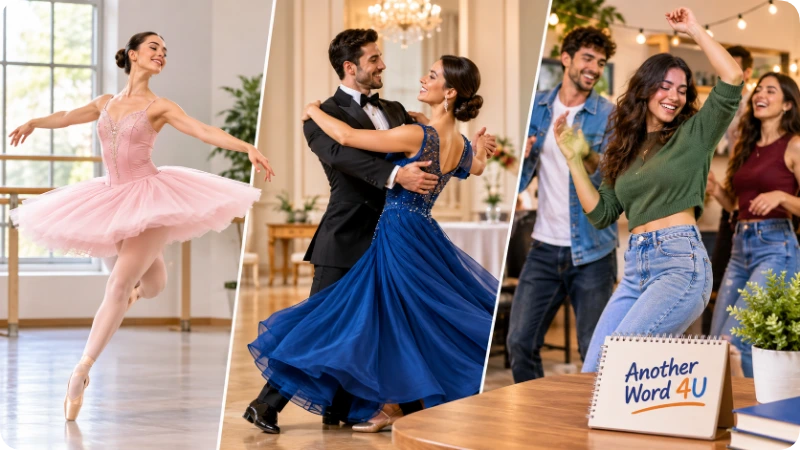
Different situations require different words. The following table helps you select a natural alternative.
| If you mean… | Use… | Why |
|---|---|---|
| Gentle movement to music | Sway | Suggests soft, relaxed movement. |
| Energetic party dancing | Boogie | Has a playful, informal tone. |
| Moving naturally with music | Groove | Emphasizes rhythm and enjoyment. |
| Turning gracefully | Twirl | Describes a smooth circular movement. |
| Turning quickly | Spin | Focuses on rotational movement. |
| A traditional ballroom style | Waltz | Names a particular partner dance. |
| A passionate partner dance | Tango | Identifies a recognizable dance style. |
| A public stage performance | Perform | Emphasizes presenting a dance to an audience. |
| Sliding foot movements | Shuffle | Describes a particular way of moving. |
| Creating dance movements | Choreograph | Refers to planning and arranging a dance. |
| Informal enthusiastic dancing | Bust a move | Sounds playful and conversational. |
| Athletic street dancing | Breakdance | Identifies a specific dance style. |
How to Choose the Right Synonym for Dance
Choosing the right alternative involves understanding what kind of movement or activity you want to describe.
1. Consider the Type of Movement
Think about how someone is moving.
- Use sway for gentle side-to-side movement.
- Use twirl for graceful turning.
- Use shuffle for short sliding steps.
- Use hop for light jumping movements.
2. Match the Tone
Some alternatives sound more casual than others.
For example, boogie and get down are suitable for informal conversations. In contrast, perform is more appropriate when discussing a professional or organized presentation.
3. Consider the Dance Style
If you know the specific style, name it instead of using the general word dance.
For example, waltz, tango, and breakdance communicate more specific information.
4. Think About Your Audience
Use familiar expressions when speaking with friends or beginners. For formal writing, choose precise descriptions such as perform a dance, present a dance performance, or describe a choreographed routine when appropriate.
5. Check the Meaning
Remember that moving rhythmically does not always mean dancing. Someone can spin, hop, or shuffle without performing a complete dance.
Real-Life Examples
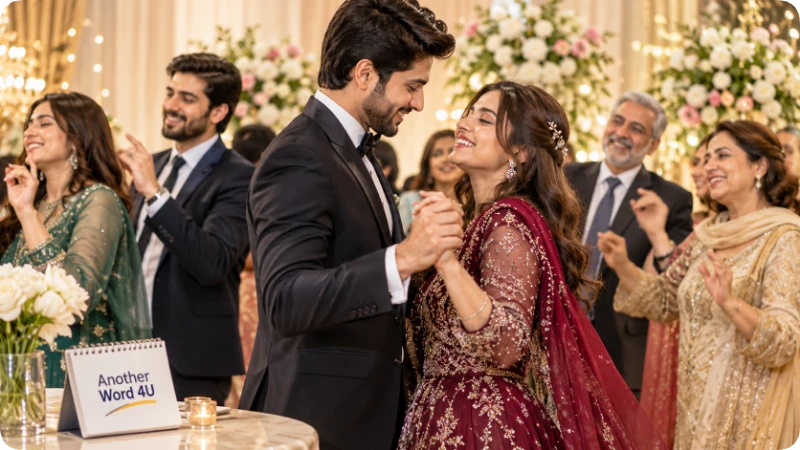
Here are practical examples showing how different alternatives work in everyday situations.
| Situation | Example Sentence | Why This Word Works |
|---|---|---|
| Wedding celebration | The newlyweds swayed to a romantic song. | Sway describes gentle movement. |
| Birthday party | Everyone started to boogie when the music began. | Boogie sounds energetic and informal. |
| Ballet performance | The ballerina twirled gracefully across the stage. | Twirl highlights a graceful turn. |
| Dance competition | The team performed an impressive routine. | Perform emphasizes the presentation. |
| Family gathering | My grandfather loves to waltz with my grandmother. | Waltz identifies a specific style. |
| Street performance | The dancer showed off his breakdancing skills. | Breakdancing describes an athletic dance style. |
| Music festival | The crowd grooved to the rhythm. | Groove communicates relaxed enjoyment. |
| Dance lesson | The instructor taught us how to shuffle. | Shuffle identifies particular footwork. |
| Friendly conversation | Come on, bust a move! | This expression encourages someone to dance. |
Antonyms for Dance
There is no single perfect opposite of dance because dancing involves different types of movement. However, several words describe actions that contrast with dancing in particular situations.
| Antonym | Meaning | Example |
|---|---|---|
| Stand still | Remain in one position without moving. | Everyone stood still when the music stopped. |
| Sit | Rest on a chair or another surface. | She decided to sit instead of dancing. |
| Freeze | Stop moving suddenly. | The dancers froze when the music ended. |
| Remain motionless | Stay completely still. | The performer remained motionless during the introduction. |
| Rest | Stop physical activity temporarily. | He rested after dancing for an hour. |
| Stay inactive | Avoid physical movement or activity. | She stayed inactive while others danced. |
Important: These are contextual opposites rather than direct dictionary antonyms. For example, sit contrasts with dancing in a particular situation, but a person can sit and dance while moving their upper body.
Words That Are Easy to Confuse With Dance
Some English words are related to dancing but have different meanings.
1. Movement
Movement refers to any change in position or physical motion. Dance is one particular type of movement, usually involving rhythm or expressive body actions.
Example: The dancer’s movements followed the music perfectly.
2. Choreography
Choreography means the planned arrangement of dance movements. It describes how a dance is created rather than the general act of dancing.
Example: The choreography for the school performance was creative and entertaining.
3. Performance
A performance is an act of presenting entertainment or artistic work to an audience. It can include dancing, singing, acting, or playing music.
Example: The dance performance received enthusiastic applause.
When Dance Is Not the Precise Choice
Although dance is a useful general word, it may not always communicate the exact action you have in mind.
When describing a particular movement: Use twirl, spin, or shuffle when the movement itself matters more than the overall activity.
Example: Instead of saying, “She danced around once,” you could say, “She twirled gracefully.”
When describing a formal stage presentation: Use perform when you want to emphasize presenting the dance to an audience rather than simply describing the physical act of dancing.
Example: “The students will perform a traditional routine at the ceremony.”
Example: “The students will perform a traditional routine.”
When describing a specific style: Choose the actual dance name, such as tango, waltz, or jive, rather than using the broad word dance.
When describing casual movement: Words such as sway or groove may communicate a relaxed atmosphere more naturally.
The key is to choose a word that describes the actual action instead of relying on a general alternative.
Phrases, Idioms, and Expressions Related to Dance
English has several informal expressions connected with dancing. These expressions make everyday conversations more natural and lively.
| Phrase or Idiom | Simple Meaning | Example |
|---|---|---|
| Bust a move | Show a dance move. | He busted a move when his favorite song started. |
| Cut a rug | Dance enthusiastically. | My parents love to cut a rug at weddings. |
| Shake a leg | Dance or start moving quickly. | Let’s shake a leg before the party ends. |
| Get down | Dance energetically. | Everyone got down when the DJ played the song. |
| Dance the night away | Spend the night dancing. | The guests danced the night away at the wedding. |
| Dance to someone’s tune | Do what another person wants or demands. | He refuses to dance to anyone else’s tune. |
Usage tip: Dance the night away describes extended dancing, while dance to someone’s tune is figurative and refers to following another person’s wishes.
Common Mistakes When Using Dance
English learners sometimes use dance-related words incorrectly. Here are four mistakes worth avoiding.
1. Treating Every Movement as Dancing
Incorrect: The child danced across the room by jumping once.
Better: The child hopped across the room.
Why: Hop describes a specific jumping movement, not necessarily a complete dance.
2. Confusing Dance With Choreography
Incorrect: She learned the choreography for two hours.
Better: She practiced the choreography for two hours.
Why: Choreography is the arrangement of movements, while dancing is the physical activity.
3. Using Informal Expressions in Formal Writing
Less suitable in formal writing: The professional dancers boogied during the official presentation.
Better for a formal context: The professional dancers performed during the official presentation.
Why: Boogie is an informal expression for energetic dancing. It can be perfectly natural in casual conversation, but perform is usually more appropriate when describing a formal stage presentation.
4. Using a Specific Dance Style as a General Synonym
Incorrect: The children tangoed at the birthday party.
Better: The children danced at the birthday party.
Why: Tango refers to a particular dance style, not dancing in general.
Comparison of Dance and Its Alternatives
The following comparison highlights how common alternatives differ in meaning, tone, and usage.
| Word | Main Meaning | Tone | Best Context |
|---|---|---|---|
| Dance | Move rhythmically, usually to music. | Neutral | General situations |
| Sway | Move gently from side to side. | Soft, relaxed | Romantic or slow music |
| Twirl | Turn around gracefully. | Expressive | Ballet and graceful movement |
| Spin | Rotate around quickly. | Neutral | Fast turning movements |
| Groove | Move naturally with rhythm. | Informal | Parties and casual dancing |
| Boogie | Dance energetically. | Playful, informal | Celebrations and parties |
| Waltz | Perform a specific ballroom dance. | Traditional, formal | Ballroom dancing |
| Jive | Perform an energetic partner dance. | Lively | Specific dance performances |
| Perform | Present an artistic act. | Neutral to formal | Stage presentations |
| Shuffle | Move with short sliding steps. | Neutral | Particular footwork |
The main difference is that dance describes the overall activity, while most alternatives identify a particular movement, style, or manner of dancing.
Frequently Asked Questions About Dance
1. What is the closest synonym for dance?
Sway and move can work as alternatives in certain contexts. However, sway describes gentle rhythmic movement, while move is much broader. The best choice depends on the action being described.
2. What is another word for dancing at a party?
Boogie, groove, and get down are popular informal expressions for dancing at a party. They communicate enjoyment, energy, and a relaxed atmosphere.
3. What is a fancy word for dance?
Perform can sound more formal when discussing a stage presentation. Sashay describes stylish movement, while choreograph refers to creating and arranging dance movements rather than performing them.
4. What is the difference between dance and movement?
Movement refers to any physical change in position, while dance generally involves rhythmic or expressive body movements. All dancing involves movement, but not every movement is dancing.
5. What are some informal ways to say dance?
Informal alternatives include boogie, groove, get down, and bust a move. These expressions are common in casual conversations, especially when talking about parties, music, and celebrations.
Final Thoughts
The best alternative to dance depends on the movement, style, tone, and situation you want to describe.
Words such as sway, twirl, spin, and shuffle describe particular movements, while boogie, groove, and get down give a more informal tone.
For specific styles, use words such as waltz, tango, or jive when that particular dance is meant.
The important difference is that not every dance-related word is a direct synonym for dance.
Choose the word that accurately describes the action, style, or context rather than using every related term interchangeably.

Sophia Bennett is a dedicated Language Researcher and Content Writer at AnotherWord4UU.com. She specializes in creating well-researched content on synonyms, alternative words, vocabulary, expressions, and English language usage. Her goal is to help students, writers, professionals, and language learners communicate more effectively by finding the most accurate and impactful words. Through clear, practical, and engaging language guides, Sophia makes expanding vocabulary simple, accessible, and enjoyable.










