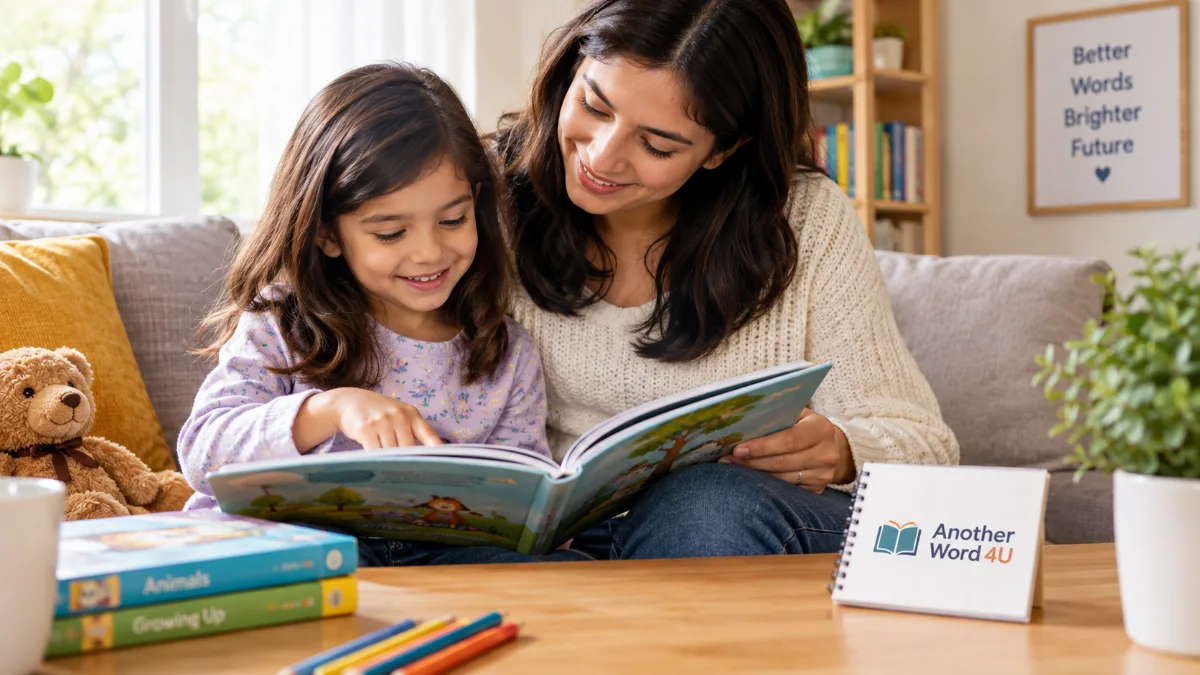
When writing a birthday card, describing a family, or talking about students, you may find yourself using the word child too often. Choosing another word can make your sentence sound more natural, specific, or expressive.
However, not every alternative means exactly the same thing. Some words describe a young person by age, while others emphasize family relationships, school life, personality, or a particular stage of development. For example, kid sounds friendly and informal, while offspring is more formal and focuses on a family relationship. Words such as toddler, infant, and teenager describe more specific age groups rather than replacing child in every situation.
Understanding these differences helps you communicate clearly without changing your intended meaning. if you are learning English, improving your vocabulary, or editing an article, this guide explains useful alternatives, their meanings, and how to choose the right word for everyday conversations and formal writing.
Featured Snippet
Another word for child is kid, youngster, young person, or little one. Kid is commonly used in casual conversations, while youngster is a friendly, neutral alternative. Minor is suitable for legal contexts, and offspring refers specifically to someone’s children. The best synonym depends on the intended meaning and tone.
What Does Child Mean?
A child is a young human being who has not reached adulthood. The word commonly describes someone from birth through the years before becoming an adult.
It is one of the most widely used words for referring to young people, especially in family, educational, and everyday situations.
Examples:
- The child is playing in the garden.
- Every child deserves a safe learning environment.
- She has one child and two grandchildren.
The word can also describe someone’s son or daughter, regardless of the specific age being discussed in a family relationship. However, in everyday usage, child generally suggests someone who is still young.
Tone and usage
- Neutral: Suitable for everyday conversations and general writing.
- Formal: Appropriate in educational, social, and professional writing.
- Family-related: Can refer to someone’s son or daughter.
- Developmental: Often used when discussing childhood and growing up.
Another Word for Child
There are several alternatives to child, but each has a slightly different meaning or tone. Some are direct replacements, while others describe a particular age, relationship, or situation.
Common Synonyms and General Alternatives for Child
| Number | Synonym/Alternative | Type | Simple Meaning | Example Sentence |
|---|---|---|---|---|
| 1 | Kid | Informal synonym | A child or young person | The kid is playing outside. |
| 2 | Youngster | Near-synonym | A young person | The youngster enjoys reading. |
| 3 | Minor | Context-specific alternative | A person below the legal age of adulthood | A minor must follow the applicable consent rules. |
| 4 | Juvenile | Formal alternative | A young person, especially in legal contexts | The juvenile attended the hearing. |
| 5 | Little one | Affectionate phrase | A young child | Their little one started walking. |
| 6 | Young person | Neutral alternative | Someone who is young | Every young person needs encouragement. |
| 7 | Little kid | Informal phrase | A young child | The little kid waved goodbye. |
| 8 | Young child | Descriptive alternative | A child of an early age | A young child needs regular supervision. |
Age-Specific Alternatives for Child
| Number | Synonym/Alternative | Type | Simple Meaning | Example Sentence |
|---|---|---|---|---|
| 9 | Toddler | Age-specific alternative | A very young child learning to walk | The toddler took her first steps. |
| 10 | Infant | Age-specific alternative | A baby in the earliest stage of life | The infant was sleeping peacefully. |
| 11 | Baby | Age-specific alternative | A very young child | The baby smiled at her mother. |
| 12 | Preschooler | Age-specific alternative | A young child attending or ready for preschool | The preschooler enjoys drawing. |
| 13 | Schoolchild | Context-specific alternative | A child who attends school | The schoolchild packed his books. |
| 14 | Pupil | Educational alternative | A learner, especially in school | The pupil asked a thoughtful question. |
| 15 | Teenager | Age-specific alternative | Someone aged 13–19 | The teenager joined a sports club. |
| 16 | Adolescent | Developmental alternative | A young person developing toward adulthood | Adolescents experience important changes. |
| 17 | Youth | Collective or age-related alternative | Young people or the period of being young | The program supports local youth. |
Family and Relationship-Based Alternatives for Child
| Number | Synonym/Alternative | Type | Simple Meaning | Example Sentence |
|---|---|---|---|---|
| 18 | Offspring | Family-related alternative | Someone’s son or daughter | Their offspring live nearby. |
| 19 | Daughter | Family-specific alternative | A female child in relation to a parent | Their daughter loves painting. |
| 20 | Son | Family-specific alternative | A male child in relation to a parent | His son plays football. |
| 21 | Sibling | Relationship-specific alternative | A brother or sister | The child played with a sibling. |
| 22 | Heir | Context-specific alternative | Someone entitled to inherit property or a position | The family’s heir was introduced at the ceremony. |
| 23 | Descendant | Family-related alternative | Someone from a later generation of a family | She is a descendant of the original family. |
| 24 | Progeny | Formal alternative | A person’s children or descendants | The family discussed its progeny. |
| 25 | Youngster | Friendly alternative | A young individual | The youngster learned quickly. |
Important distinction: Some alternatives describe narrower age groups or family relationships. Infant, toddler, and teenager refer to particular stages of childhood or youth. Daughter, son, and offspring describe family relationships, while minor and juvenile are commonly used in legal or formal contexts. They should not automatically replace child in every sentence.
Best Synonym by Context

The right alternative depends on what you want to communicate. Consider these common situations:
| If you mean… | Use… | Why |
|---|---|---|
| A child in casual conversation | Kid | Friendly and informal. |
| A young person in general writing | Youngster | Natural and approachable. |
| Someone below legal adulthood | Minor | Appropriate in legal and official contexts. |
| A young person in a legal context | Juvenile | Formal and often associated with legal matters. |
| Someone’s son or daughter | Offspring | Emphasizes the family relationship. |
| A baby who is beginning to walk | Toddler | Identifies a specific developmental stage. |
| A very young baby | Infant | More precise than child. |
| A child receiving education | Pupil | Emphasizes the learning relationship. |
| A young person aged 13–19 | Teenager | Gives a more specific age description. |
| A child you are speaking about affectionately | Little one | Expresses warmth and affection. |
| Young people as a group | Youth | Common in community and social contexts. |
How to Choose the Right Synonym for Child
Choosing an alternative becomes easier when you consider the meaning and situation.
1. Consider the person’s age
Use infant for a baby, toddler for a young child learning to walk, and teenager for someone aged 13–19. These words provide more specific information than child.
2. Match the level of formality
Kid works well in everyday conversations, but minor is more appropriate in legal or official writing. Young person is a useful neutral alternative.
3. Think about the relationship
If you are describing a family relationship, son, daughter, offspring, or descendant may communicate your meaning more accurately.
4. Consider the emotional tone
Little one sounds affectionate, while juvenile can sound technical or institutional. Choose language that suits your audience.
5. Check the sentence meaning
A pupil is someone learning in an educational setting, whereas a child describes age or developmental status. Do not use these words interchangeably when the distinction matters.
Real-Life Examples
Here are practical examples showing how different alternatives work in everyday situations.
| Situation | Example Sentence | Why This Word Works |
|---|---|---|
| Casual conversation | The kids are playing in the park. | Kids sounds relaxed and natural. |
| Formal writing | Every minor has certain legal protections. | Minor suits legal discussion. |
| Family conversation | Their little one is growing quickly. | Expresses affection. |
| School environment | The pupil completed her assignment. | Emphasizes the student’s role. |
| Parenting | Our toddler refuses to take afternoon naps. | Identifies a specific age group. |
| Healthcare | The infant needs regular feeding. | More precise for a very young baby. |
| Community programs | The organization supports local youth. | Refers to young people collectively. |
| Family history | Their descendants continued the family tradition. | Focuses on later generations. |
Antonyms for Child
Child does not have one perfect opposite in every context. However, several words express contrasting ages or life stages.
| Antonym | Meaning | Example |
|---|---|---|
| Adult | A fully grown person. | Every adult has different responsibilities. |
| Grown-up | An adult, often in informal language. | The children wanted to behave like grown-ups. |
| Mature person | Someone with developed judgment or maturity. | A mature person takes responsibility for their decisions. |
| Elder | An older person, sometimes respected for experience. | The village elder shared his knowledge. |
| Senior | An older person or someone of higher age or status. | The center organizes activities for senior citizens. |
| Parent | An adult who has a child. | The parent attended the school meeting. |
These are contextual opposites rather than exact dictionary antonyms. For example, parent describes a family role, while adult describes an age or legal status.
Words That Are Easy to Confuse With Child
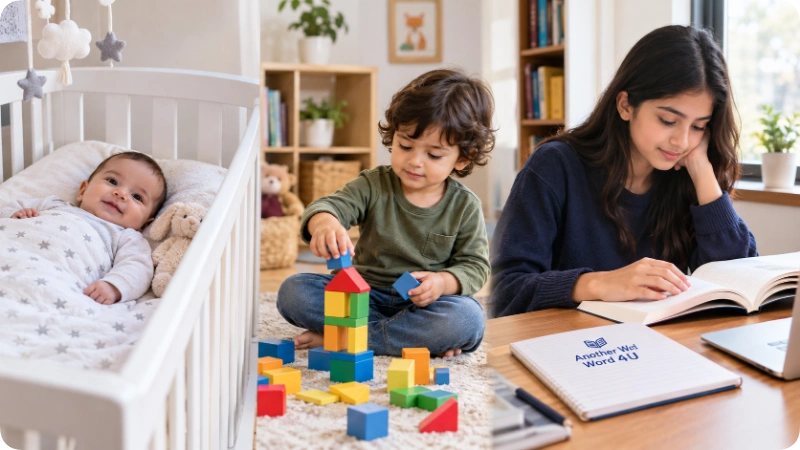
Some related words are easily confused with child because they describe young people or family relationships.
1. Baby
A baby is a very young child, usually in the earliest stage of life. It is more specific than child.
Example: The baby is sleeping in the crib.
2. Teenager
A teenager is someone aged 13 through 19. Although teenagers are young people, the word identifies a specific age group.
Example: The teenager is preparing for her final school exams.
3. Offspring
Offspring refers to someone’s children or descendants. It emphasizes biological or family relationships rather than a person’s age.
Example: The bird protects its offspring from predators.
When Child Is Not the Precise Choice
Although child is useful in many situations, a more specific word can sometimes communicate the intended meaning better.
- When discussing babies: Use infant or baby instead of child when the person’s very young age matters.
- When describing legal status: Use minor when referring to someone who has not reached the applicable legal age of adulthood.
- When discussing teenagers: Use teenager or adolescent when the age or developmental stage is important.
- When describing family relationships: Use son or daughter when the person’s relationship to a parent matters.
- When discussing education: Use pupil or student when the focus is on learning rather than age.
The goal is not to replace child everywhere. It is to choose a word that gives readers the information they actually need.
Phrases, Idioms, and Expressions Related to Child
These expressions are connected to childhood, young people, or growing up. They are phrases and idioms, not direct single-word synonyms.
| Phrase or Expression | Meaning | Example |
|---|---|---|
| Child’s play | Something very easy to do. | For an experienced player, the puzzle was child’s play. |
| Like a child | In a manner associated with childhood. | He laughed like a child when he saw the surprise. |
| Raise a child | To care for and bring up a young person. | It takes patience and commitment to raise a child. |
| Bring up a child | To care for and teach a child while they grow. | They worked together to bring up their child. |
| Only a child | Emphasizes someone’s young age or limited experience. | She was only a child when she moved abroad. |
| Inner child | The childlike feelings and experiences that remain within an adult. | The activity helped him reconnect with his inner child. |
Common Mistakes When Using Child
English learners sometimes use child and its alternatives incorrectly. These are a few mistakes worth avoiding.
1. Using kid in every formal situation
Kid is common in conversation, but it may sound too informal in academic or official writing.
Better: Use child or young person when a neutral tone is needed.
2. Treating toddler and infant as interchangeable
An infant is a baby in the earliest stage of life, while a toddler is a young child who is beginning to walk.
Better: Choose the term that matches the actual age and developmental stage.
3. Using offspring to describe any young person
Offspring emphasizes a family or biological relationship, not simply someone’s young age.
Better: Use youngster or young person when discussing someone without emphasizing family relationships.
4. Assuming juvenile always sounds friendly
Juvenile can sound technical, institutional, or negative depending on the context.
Better: Use young person for a more neutral description.
Comparison of Child and Its Alternatives
The following comparison highlights the most useful differences between child and its common alternatives.
| Word | Meaning Focus | Tone/Formality | Best Context |
|---|---|---|---|
| Child | General young person. | Neutral. | Everyday and formal writing. |
| Kid | General young person. | Informal. | Casual conversations. |
| Youngster | Young individual. | Friendly, neutral. | General descriptions. |
| Minor | Legal age status. | Formal. | Legal and official writing. |
| Juvenile | Young person. | Formal, technical. | Legal or institutional contexts. |
| Offspring | Family relationship. | Formal. | Biology and family discussions. |
| Infant | Very young baby. | Neutral, clinical. | Healthcare and early development. |
| Toddler | Young child learning to walk. | Neutral. | Parenting and development. |
| Teenager | Person aged 13–19. | Neutral. | Age-specific discussions. |
| Little one | Young child. | Affectionate. | Family conversations. |
The biggest distinction is that child is a broad term, while most alternatives provide additional information about age, relationships, or context.
Frequently Asked Questions About Child
1. What is the most common synonym for child?
Kid is one of the most common alternatives to child in everyday English. It has a friendly, informal tone and is frequently used in casual conversations. In formal writing, child or young person is generally more suitable.
2. What is a more formal word for child?
Minor, juvenile, and offspring can be more formal alternatives, depending on the context. Minor is especially useful in legal writing, juvenile appears in institutional or legal contexts, and offspring emphasizes family relationships.
3. Is youngster another word for child?
Yes. Youngster is a useful near-synonym that refers to a young person. It generally sounds friendly and natural, although it can also include older young people rather than only small children.
4. What is the difference between child and kid?
Both words can refer to a young person, but their tone differs. Child is neutral and appropriate for formal and informal writing, whereas kid is more conversational and informal.
5. What is the plural of child?
The plural of child is children, not childs. For example, you should write, “The children are playing outside.” Children is an irregular plural, so it does not follow the usual rule of adding -s.
Final Thoughts
Choosing the right synonym for child depends on the meaning you want to communicate.
Kid works well in casual conversations, youngster is a friendly alternative, minor suits legal contexts, and infant or toddler provides more specific age information.
Words such as offspring, son, and daughter emphasize family relationships. Rather than replacing child with any related word, consider its meaning, tone, formality, and audience.
A precise word makes your English clearer, more natural, and easier to understand.